Ezi Odozor
Hi guys!
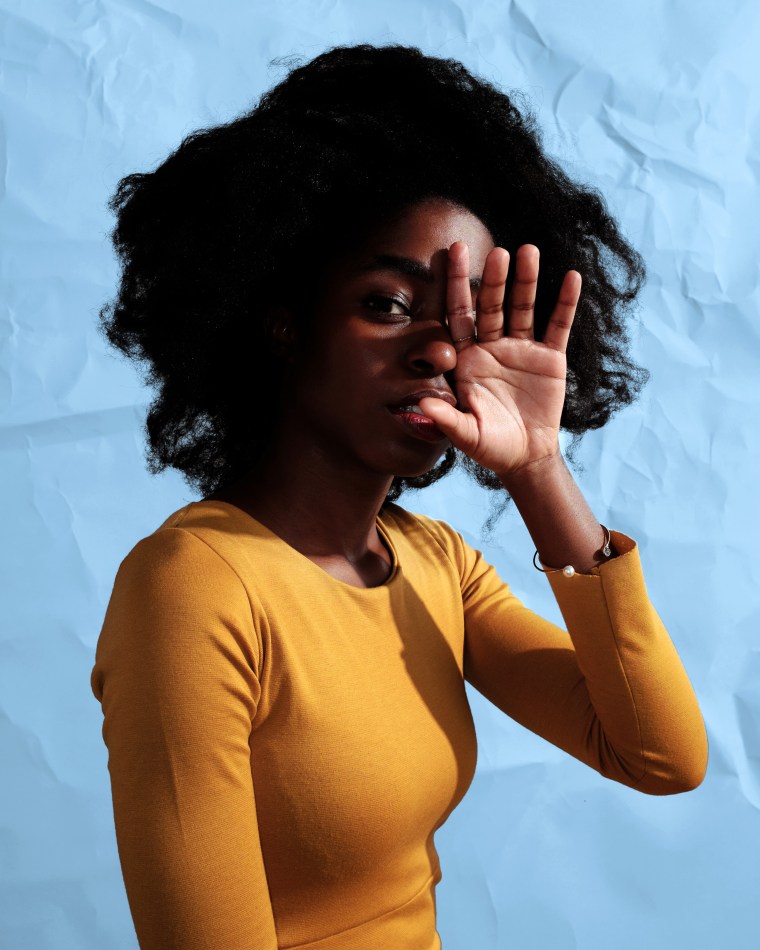
I would like to introduce this amazing woman to you! I met Ezi when I was in first year and my friend dragged me to an NSA event. She started the group and was president at the time. It’s a little crazy how three years later I was chosen to continue a legacy she had put in place. I remember thinking she was so cool and important then and its funny how that impression hasn’t changed at all even with time. Reading her post was really special for me because I felt it really spoke to the deep cultural ties that many Nigerian women can relate to. I know that you would enjoy reading this just as much as I did :)!
Who are you (What are the things that make up your identity, likes, interests, quirks)?
My name is Ezinwanne Toochukwu Odozor—Ezi for short. I’m a graduate of the University of Toronto. I double majored in English and in Human Biology, specifically in Global Health.
Writing is my medium for expression—whether poetry, stories, essays or music.
Global Health is a field that allows me to be myself: to be passionate, to be an advocate, to write, to think, and to create. I specifically am working on getting into the field and focusing on child and maternal populations.
In my life I’ve been a counselor, a student service representative, a program coordinator for a medical residency program, an Executive Board Member and Unit President of a large Employee Union at a major University, a friend, a writer, a lover, a singer, a terrible saxophonist, a jewelry maker, and a goof.
I have been many things, but I think the core part of who I am is tied to my name. Ezinwanne means the good sibling, or neighbour.
In everything I’ve done, I’ve looked to support others and to really explore the human condition—whether through art, academia, or advocacy. That is who I am, I suppose.
What do you feel being a Nigerian woman means?
Huge question. It means being a woman, an African woman, in a world that will not readily recognize you. In a country blessed by every excellence of the natural world, but stressed by a colonial history. It means that you will add colour to the life of people around you. It means that whether Edo, Igbo, Hausa, Yoruba, or Tiv you will be born into a tradition of strength and will have the job of passing that strength on to others. It means that you will have to bear much and it will be a beautiful struggle. It means that you will have a network of sisters who will laugh and cry with you, but who will also make you shine your eyes on occasion.
It is hard to say what being a Nigerian woman means. It is a thing that you feel in your core and when you look at your sister, you just know she feels it too. That’s what I think at least.
Has your identity as a Nigerian ever been questioned? Why and how did you respond?
Definitely it has been: by friends, by strangers, by lovers.
I was born in Nigeria, but I came here when I was nearly two years old. Ever the busy body, I was walking, speaking fluently—in Igbo mind you—and, by all reports, causing all kinds of mischief.
When people ask me where I’m from, I say Nigeria. Inevitably they’ll ask when I came to Canada. When I say 1992 they smile and say, “Oh” or “You’re Canadian then,” as if this would undue my dual citizenship and safely place me in a plane of being that they could easily digest; that I must be one or the other. My response is to force a smile and say, “No I’m Nigerian.” I am Canadian too it’s true, but it is my Nigerian identity that has in great part added colour and flavour to my understanding of myself.
At 24, I still speak Igbo and understand it fluently. I’ve passed the test of the aunties: I can cook our many flavoured dishes, I know my tradition well, and I can tie a mean ichafu (headscarf for my Oyingbos; gele for my Yorubas).
My parents never let any of us children—whether born here or not—forget where we come from. They made sure we went to cultural events and meetings and sat us down many a night to remind us of our cultural duties. I am grateful for this. Igbos are a very strong, traditionally grounded people in general. As an academic in the field of African Literature (Postcolonial studies, literatures, etc) my Father in particular played a great role in fostering a connection to our Nigerianess.
Being Nigerian is more than a location and more than the number of years you spent steeping in one place or another.
I wrote a response for the Guardian on the topic of migration actually. They abridged it a bit. Read the full thing here
When did you become conscious of your identity as a Nigerian woman?
I’ve always been conscious of it. I’ve always been conscious of the fact that I’m female and of the fact that I’m Nigerian and of the intersection of the two. My consciousness of it as a young child was definitely not so ideological and intellectually developed as my consciousness of it is now, but I always aware of it. In the Igbo tradition as the ada of my Kindred—that is the first girl of my kindred, not just of my immediate family—there is a responsibility that comes with that, and so it’s a formal part of my consciousness. Again, my family respects the traditions of my people and so this is an important part of that.
What is your vision for Nigerian women?
I think we need more cohesion. I’m a supporter of group empowerment and cohesive competition—words abi? What I mean is that the group should gather together to push its members higher; not always by agreeing, but always by supporting, and by seeking each other out, such that no one feels alone in their quest. Empirically, there are way too many Nigerians for any of us to be feeling isolated or unsupported. We also need to be more visible in our strength. Too often are we ready to bow and bend and appease. There are far too many Nigerian women achieving the impossible and yet, where are their collective stories? We cannot wait for others to sing for us. A Nigerian-feminist force would be a powerful one if developed into a movement. What would the west do without us—women and men of Africa, of Nigeria. If we realized our greatness as a collective, as women in particular, we would unstoppable. What a beautiful thought really.
Who is a Nigerian woman in your life who inspires you?
My mom. Perhaps that is cliché, but if you knew her it’d be undeniable that she is a beautiful force. The things she has been through; the things she does for people. All of them are gorgeously handled. She keeps telling us that when she retires she’ll become a lawyer. She’s tireless. She is a builder of people and of ideas. I enjoy hearing about the new programs that she brings into her school board to help the Children she teaches, especially the things she does to empower the special needs children. She doesn’t allow anyone to tell them that they are incapable, she believes that there is a way for everyone to come into their greatness. Whether they are market women or managers, Nigerian women have a kind of perseverance that is enviable.
Where can people find you and your work?
www.echoolibrary.wordpress.com

























 Begin
Begin 
